
Wood-Look Porcelain vs. Hardwood Flooring: Which Is Better in South Florida?
For most South Florida homes, wood-look porcelain tile is the more practical choice over hardwood, because it delivers the appearance of wood while being fully waterproof, dimensionally stable in humidity, and effectively immune to the warping and cupping that affect real wood in this climate. Hardwood still wins on authenticity, underfoot warmth, and the ability to be refinished. Both can work here. Which one is right depends on the room, the humidity it sees, and what you value most. Here is an honest comparison.
What Is Wood-Look Porcelain Tile?
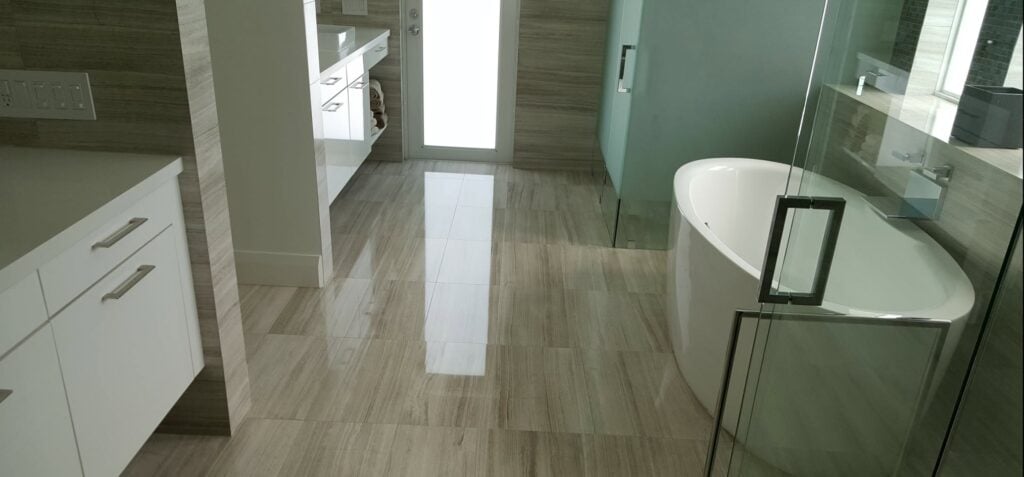
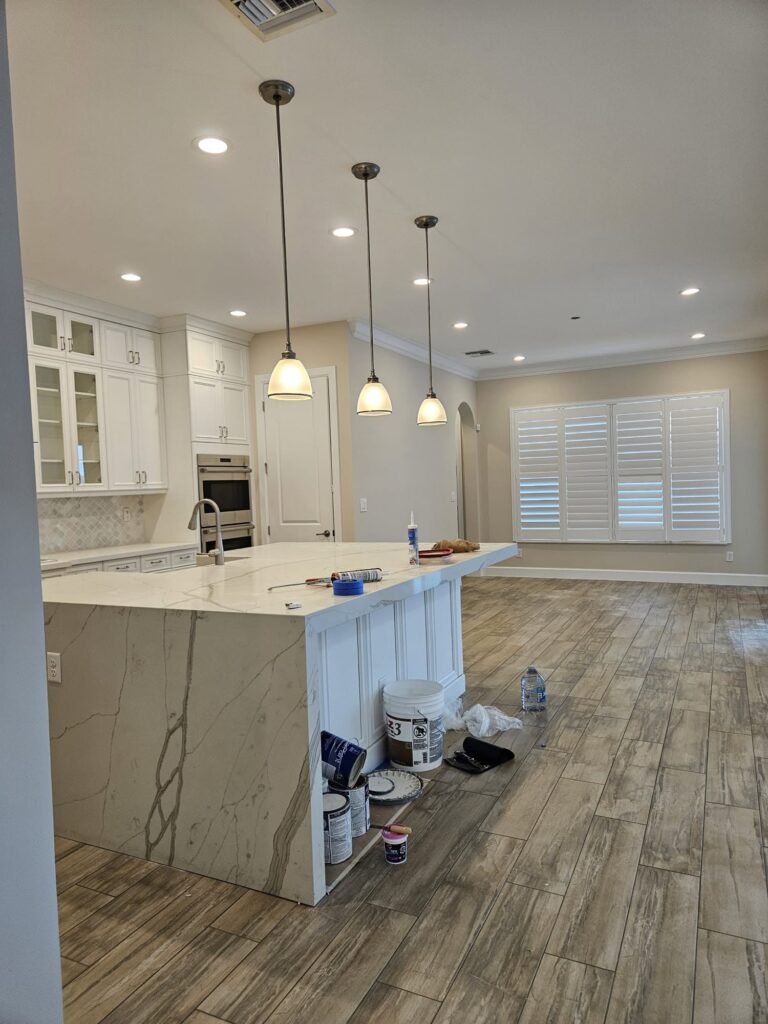
Wood-look porcelain is a porcelain tile manufactured in plank format and printed with wood grain, then textured so the surface has the feel of wood rather than the flat sheen of tile. Modern versions use varied plank patterns so the grain does not visibly repeat across a floor. Underneath the appearance it is porcelain: dense, hard, and highly water-resistant, with none of wood’s response to moisture.
What Is Hardwood and Engineered Wood Flooring?
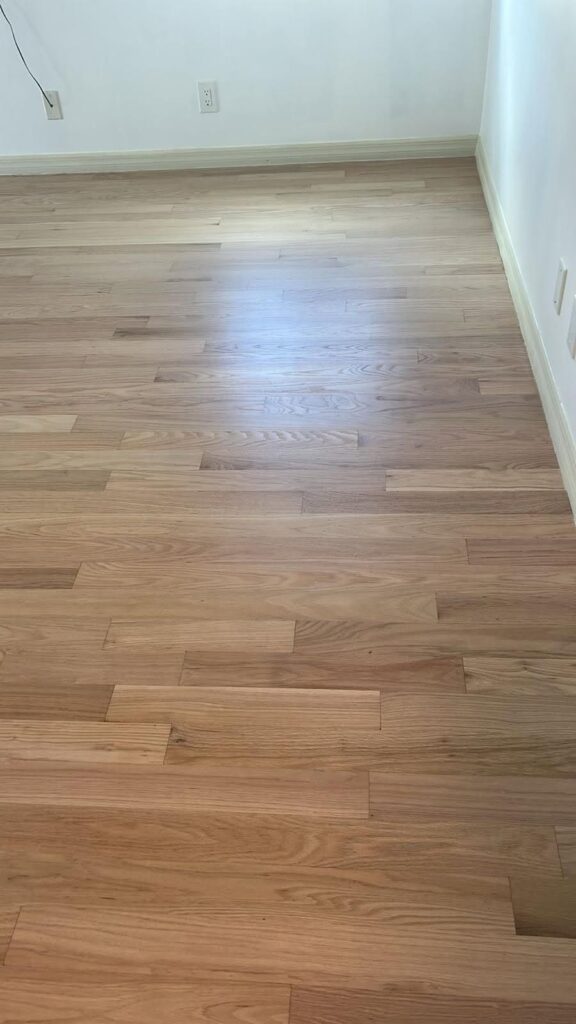
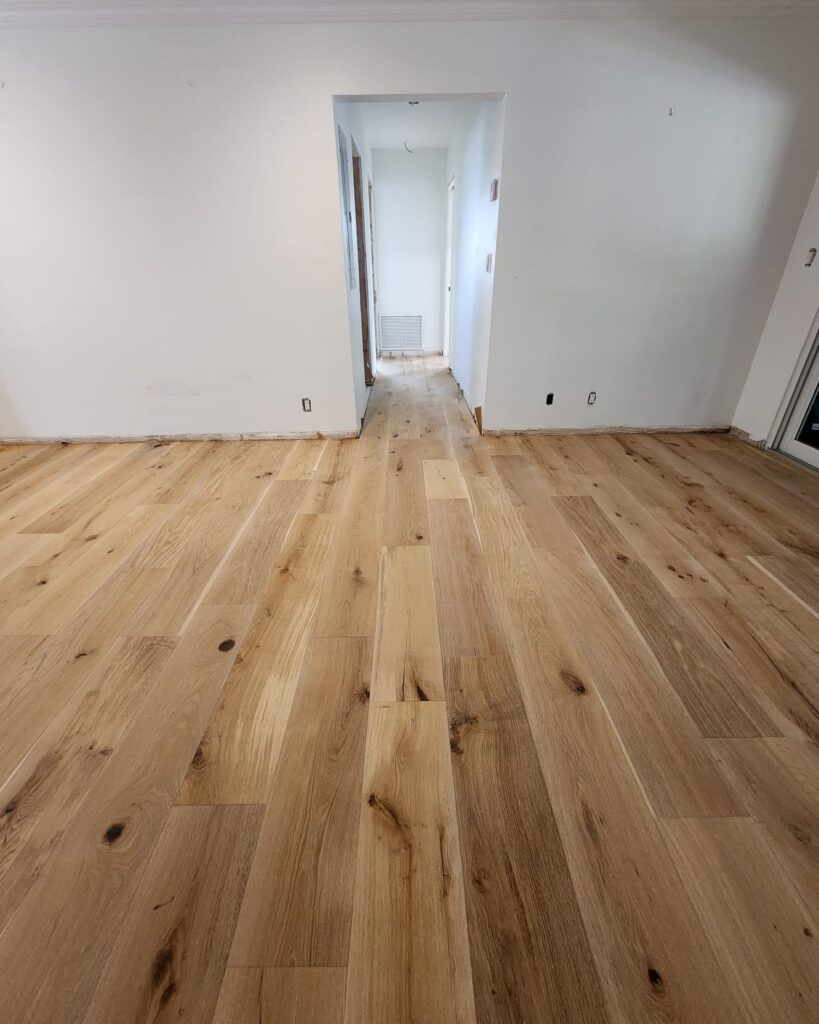
Solid hardwood is milled from a single piece of wood and can be sanded and refinished many times over its life. Engineered wood has a real hardwood top layer bonded to a stable multi-layer core, which makes it far less reactive to humidity than solid wood while still being genuine wood on the surface. In South Florida, engineered wood is almost always the better of the two, and it is what we recommend when a client wants real wood underfoot.
Wood-Look Porcelain vs. Hardwood at a Glance
|
Feature |
Wood-Look Porcelain |
Hardwood / Engineered Wood |
|---|---|---|
|
Water resistance |
Fully waterproof |
Vulnerable, engineered handles humidity better than solid |
|
Humidity stability |
Unaffected |
Can swell, cup, or gap, engineered far more stable |
|
Durability |
Very high, resists scratches and dents |
Softer, shows scratches and pet damage |
|
Comfort underfoot |
Harder and cooler |
Warmer and softer |
|
Refinishing |
Not refinishable, replace damaged tiles |
Can be sanded and refinished, engineered a limited number of times |
|
Wet areas |
Suitable for bathrooms, kitchens, laundry |
Not recommended for wet areas |
|
Typical installed cost |
Roughly $9 to $22 per sq ft |
Roughly $8 to $18 per sq ft |
|
Best for |
Whole home, wet areas, coastal and ground-floor |
Bedrooms, living areas, climate-controlled spaces |
Why Wood-Look Porcelain Usually Wins in South Florida
Our climate is the deciding factor. High year-round humidity, frequent rain, salt air near the coast, and concrete slab construction that can wick moisture upward all work against real wood. Solid hardwood responds to that moisture by swelling and cupping. Engineered wood handles it far better, but it is still wood, and it still has limits.
Porcelain has no such response. It does not absorb moisture, so it does not move with the seasons, and it can go in bathrooms, kitchens, laundry rooms, and ground-floor spaces where wood should not. In a coastal condo or a slab-on-grade home, that difference is not a preference, it is often the whole decision.
Durability compounds the advantage. Sand and grit tracked in from the beach act like sandpaper on a wood finish. Porcelain shrugs it off. For homes with pets, children, or heavy traffic, a wood-look porcelain floor will look better in year ten than a wood floor that has not been refinished. For a broader look at how our climate affects every flooring material, see our guide to the best flooring for humid homes in Boca Raton.
When Hardwood Is Still the Better Choice
Wood has real advantages, and it would be dishonest to pretend otherwise.
Nothing feels like wood underfoot. It is warmer, softer, and quieter than tile, and in bedrooms and living areas that comfort matters. Wood can also be refinished, so a floor that looks tired after fifteen years can be brought back rather than torn out, and engineered wood can take a limited number of refinishes depending on the thickness of its wear layer.
There is also authenticity. A high-quality wood-look porcelain is convincing, but it is a reproduction, and some homeowners simply want the real material. In a climate-controlled interior room, away from wet areas and not on a moisture-prone slab, engineered wood performs well in South Florida and will last for decades with reasonable care.
If those things matter more to you than waterproofing, engineered wood is the right answer, and we install it.
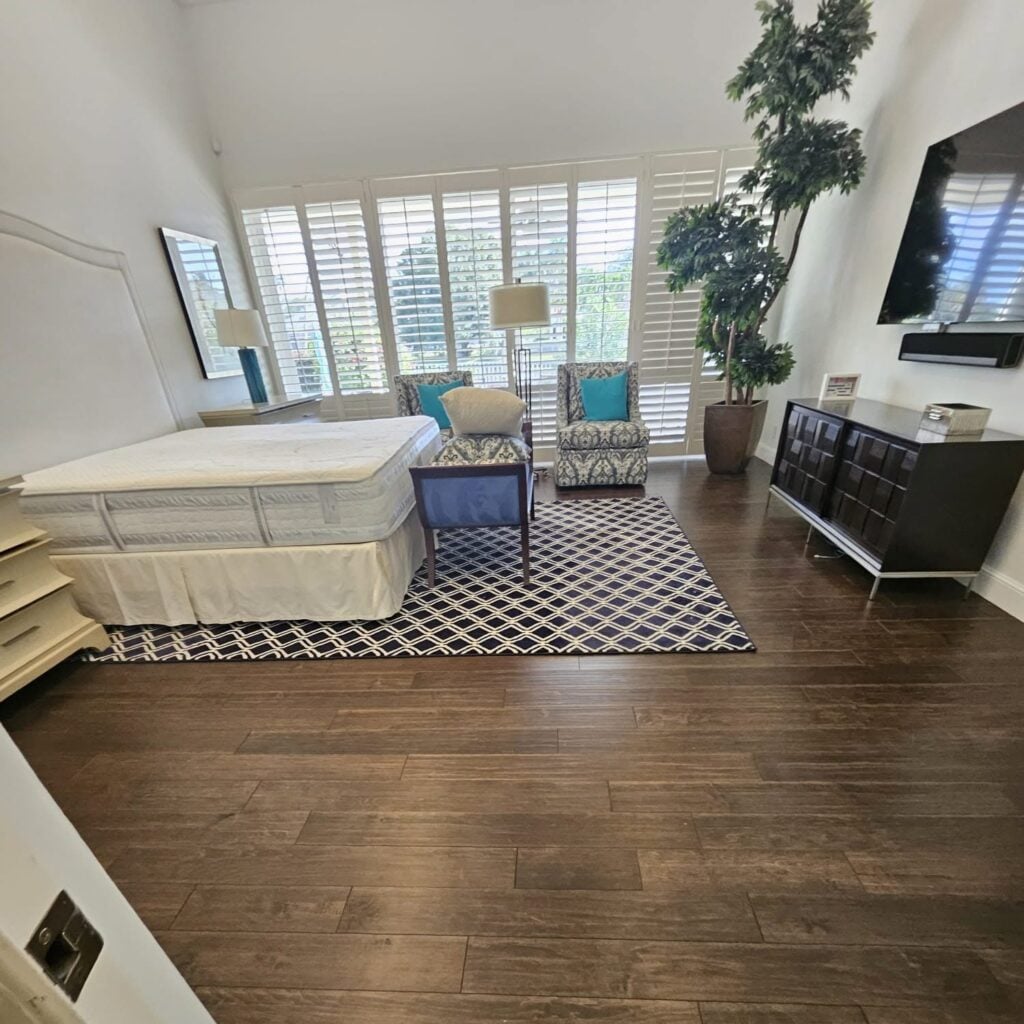
How to Choose Between Wood-Look Porcelain and Hardwood, Room by Room
A practical way to decide, room by room:
- Wet or moisture-prone spaces. Bathrooms, kitchens, laundry rooms, entryways, and anything opening to a pool or patio. Choose wood-look porcelain.
- Ground floor on a concrete slab. Slab moisture is a real risk here. Porcelain is the safer choice unless slab testing comes back clean and a proper moisture barrier is installed.
- Coastal condos and beachfront properties. Salt air and humidity reach everything. Porcelain, or engineered wood if you want real wood and accept the maintenance.
- Interior bedrooms and living areas, climate controlled. Either works. Choose based on whether you value warmth underfoot or durability.
- Homes with pets, kids, or heavy traffic. Porcelain, unless you are prepared to refinish wood periodically.
- Whole-home consistency. Wood-look porcelain lets you run one material through wet and dry spaces without a transition, which wood cannot do.
Installation Is Where Wood-Look Porcelain Goes Wrong
Wood-look porcelain planks are long and narrow, and they are usually slightly crowned through the center as a normal part of manufacturing. That geometry makes installation less forgiving than standard tile. Offsetting long planks by half, the way a bricklayer would, sets the end of one plank against the high point of its neighbor, which produces lippage or cracking. Industry guidance is to keep the offset to roughly a third or less. The substrate also has to be leveled properly, because a long plank telegraphs every dip in the slab.
A wood-look porcelain floor that looks wrong is almost always an installation problem, not a product problem. This is worth asking any contractor about before you hire them. Learn more about how we install wood-look and large-format porcelain tile.
Frequently Asked Questions About Wood-Look Porcelain and Hardwood in South Florida
Is wood-look porcelain cheaper than hardwood?
Wood-look porcelain and hardwood overlap heavily in price, so cost is rarely the deciding factor. Porcelain typically runs about $9 to $22 per square foot installed in South Florida, and wood roughly $8 to $18, with large-format planks and premium hardwoods pushing the top of each range. Porcelain usually costs less to own over time, since it needs no refinishing.
Does wood-look tile feel cold or hard underfoot?
Wood-look porcelain is harder and cooler underfoot than real wood, which is a genuine trade-off. In South Florida that coolness is usually welcome rather than a drawback, and area rugs soften the effect in bedrooms and living rooms. If underfoot warmth and softness are a priority for you, engineered wood is the more comfortable choice.
Can wood-look porcelain be used in bathrooms and kitchens?
Yes, and this is one of its biggest advantages. Wood-look porcelain is fully waterproof, so it can be installed in bathrooms, kitchens, laundry rooms, and entryways where real wood should not go. That lets you run one continuous floor through wet and dry spaces without transitions, which is not possible with hardwood.
Does wood-look tile add value to a home?
Wood-look porcelain is generally viewed favorably by South Florida buyers because it delivers the appearance of wood with performance suited to the climate. Buyers here understand that hardwood struggles with humidity and wet areas. Quality of the material and the installation matters more than the category, since visible lippage or an obviously repeating grain pattern undercuts the look.
What are the disadvantages of wood-look tile?
The main disadvantages of wood-look tile are that it is harder and cooler underfoot than wood, it cannot be refinished, and it is a reproduction rather than real wood. Installation is also less forgiving, since long planks require a well-leveled substrate and a limited offset pattern. A poorly installed wood-look floor shows its flaws immediately.
Is engineered wood ever the better choice in Florida?
Yes. Engineered wood is the better choice when you want genuine wood underfoot in a climate-controlled interior space away from wet areas, when warmth and softness matter to you, or when you want a floor that can be refinished later. Its layered core handles Florida humidity far better than solid hardwood, which we rarely recommend here.
Get Honest Flooring Advice in Boca Raton
Still weighing wood against wood-look? Prestige Flooring of North America installs both across Boca Raton and South Florida, and we will tell you which one actually fits your rooms rather than which one we would rather sell. Call (561) 589-3280, email info@PrestigeFlooringFL.com, or book a free consultation online.
About the Author
Luc Miron is the founder of Prestige Flooring of North America, a family-owned flooring and remodeling company serving Boca Raton and South Florida since 2011. A graduate of HEC Montréal, Luc has spent more than a decade helping South Florida homeowners choose flooring that fits both their style and the local climate.